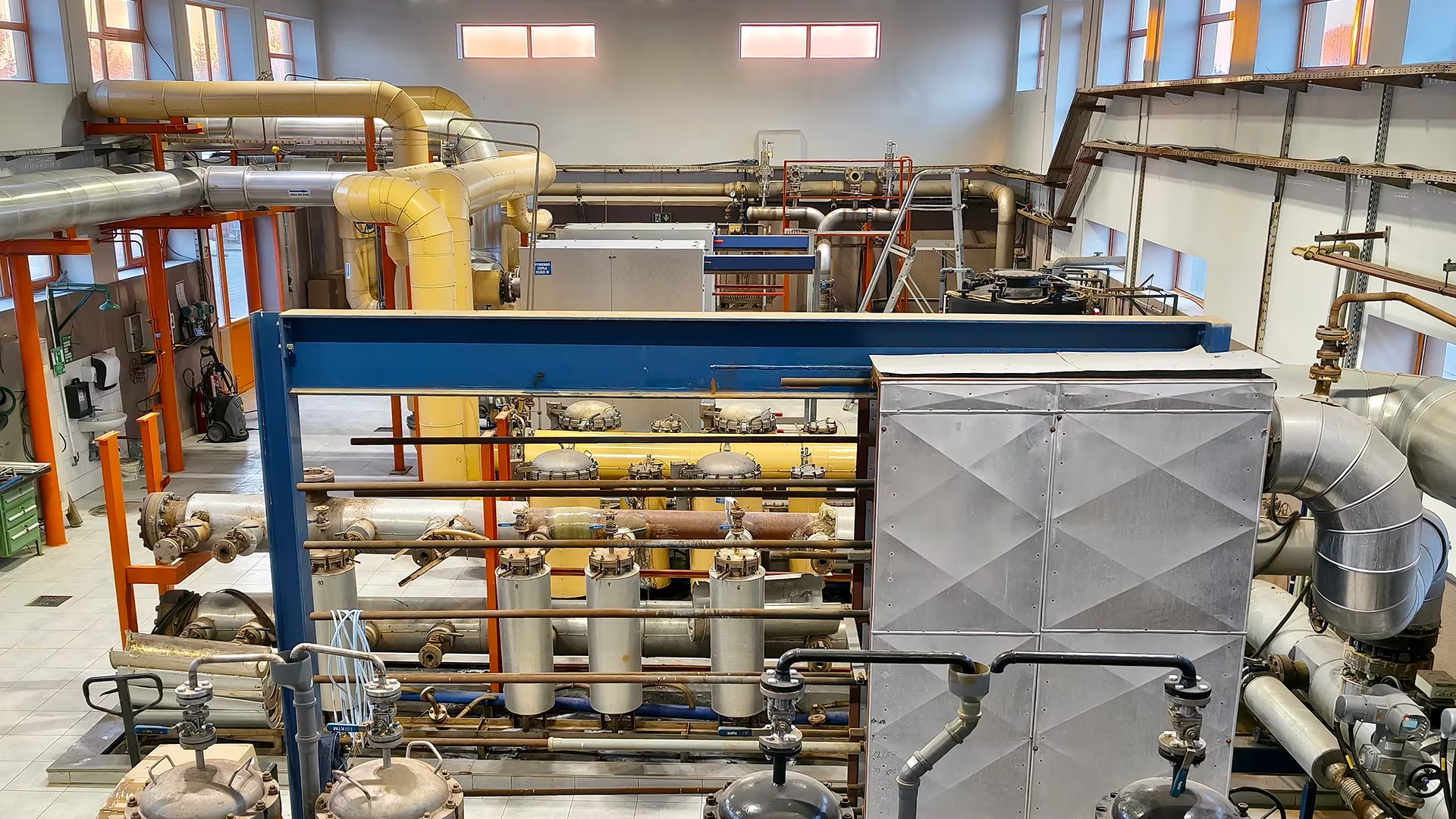
The viability of using thermal waters depends on a confluence of natural (geological) and infrastructural parameters. In 2025, with rising CO₂ emission costs, geothermal energy is becoming one of the most price-stable alternatives to coal and gas.
Key viability factors:
Water temperature: This is the most important parameter – the higher the wellhead temperature, the more energy can be recovered without additional heating. Sources with temperatures above 50–60°C are considered viable for district heating.
- Source capacity (reservoir injectivity): Determines how many cubic meters of water can be extracted per hour. For large municipal installations, a capacity of minimum 100 m³/h is required.
- Mineralization (salinity): High salinity water is corrosive and causes scaling (clogging), which raises installation maintenance costs and requires the use of expensive titanium heat exchangers.
- Consumer market: Investment is most profitable where there is a developed municipal heating network, ensuring constant uptake of large amounts of heat throughout the year.
- Reinjection capability (geothermal doublet): For resources to be renewable, cooled water must be pumped back into the reservoir. This requires a second expensive well (injection), but prevents reservoir depletion and problems with surface disposal of salty water.
Geotermia Stargard against this background:
Stargard is recognized as one of the best examples of viability in Poland because it combines excellent natural parameters with effective management:
- High temperature: Water extracted from a depth of approx. 2670 meters is nearly 90°C, which allows for direct feeding of the municipal network for most of the year.
- Scale of impact: Thanks to cooperation with the Municipal Heating Company (PEC), in 2025 geothermal energy already covers over 62% of the city's heat demand.
- Technical challenges: Despite high mineralization (approx. 140 g/l), which requires advanced anti-corrosion technologies, Stargard has achieved operational stability, becoming a model for other municipalities visiting the facility as part of study tours.